- Spend a few minutes reflecting upon pleasant memories of your pet
- Contribute to an animal protection group
- Volunteer at an animal protection group
- Create a small memorial in a flower garden in your yard
- Plant a tree or a shrub as a living memorial: Through the Arbor Day Foundation’s Trees For Pets program, for just $10 you may have 10 trees planted in memory of your pet and a personalized card or certificate identifying where the trees have been planted.
- Think about your late pet. Look at old photos. Talk about your pet with others who were familiar with it. Reflect on all the great memories you made with your pet. If you lost your pet unexpectedly, try to keep your thoughts positive.
- Visit your pet’s burial site. Make a tribute to your pet by decorating its burial site with something it may have enjoyed in life. Talk to your pet while at the burial site.
- Create a small memorial in your pet’s honor. Plant trees, shrubs and flowers to memorialize your pet. These things can remind you of your pet long after National Pet Memorial Day has passed.
- Donate money or time to a charity or organization in honor of your late pet. Choose an organization or charity based on your animal’s breed or a particular cause that is close to your heart. Animal shelters, rescue groups and humane societies all appreciate volunteers.
- Send sympathy cards to former pet owners. National Pet Memorial Day does not have to be a solitary affair. Include everyone who has lost a pet in your observance of National Pet Memorial Day.
How to Remove Pet Hair from Clothing
Once you have the pet hair in your home relatively under control, focus on getting it off—and keeping it off—your clothing.
1. Pre-treat
Before washing, toss items that have pet hair on them into the dryer and set it on heat-free, tumble only, for ten minutes.
2. Wash
Shake out clothing, then place in washer and wash as usual. Add 1/2 cup of white vinegar to the machine to help loosen pet hair.
3. Dry
Clean the lint filter. Shake out clothing again, then place in dryer, with either a dryer sheet or dryer balls - either one will help release any remaining pet hair. Use the regular settings to dry.
Extra Tips:
• Keep your pets out of your closets!
And your drawers, too! Otherwise, your clean clothes might accumulate a layer of pet hair before you even get the chance to wear them.
• Stock your arsenal!
There are lots of ways to spot remove pet hair from clothes. Lint rollers are a favorite, but you can also use a damp sponge, a squeegee, or a rubber mitt (such as the Love Glove) meant for brushing your pet. Choose a method (or two), and make sure that you have the tools you need when and where you need them.


National Adopt a Senior Pet Month
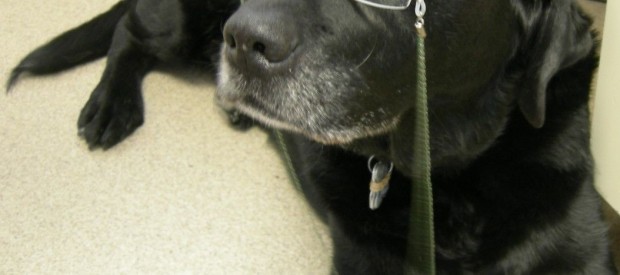
November is National Adopt a Senior pet month and All Star Pet Resort in Torrance, CA wants to share some information with your friends and customers regarding the benefits of adopting and older dog.
Many people walk into a Los Angeles Animal shelter or scour a rescue’s local Los Angeles pet website hoping to adopt a new puppy or kitten, completely overlooking the perfectly adoptable older dogs and cats in kennels and cages in their search.
But this National Adopt a Senior Pet Month, which runs through the end of November, shelters and rescues across Los Angeles County are hoping those looking to adopt a new furry friend will consider adding a senior pet to the family.
According to a Petfinder.com survey conducted for September’s Adopt a Less Adoptable Pet Week, the absolute most difficult group of homeless pets to place are older dogs and cats. Senior pets tend to spend the longest amount of time at a shelter or rescue before finding their forever home — if they find one at all, that is. Older canines and felines of advanced age have higher euthanasia rates than their younger counterparts, and can often live the rest of their lives out in a shelter kennel.
Facts like these make National Adopt a Senior Pet Month so important.
There are plenty of benefits to selecting an older pet over a younger one. Because senior pets are typically calmer and less energetic than puppies and kittens, it is easier to teach them new tricks. In fact, many senior pets are already pros at performing basic commands. Their low-key natures can also make them ideal for households with children.
What some adopters of younger pets are unprepared for is what hard work it can be to housetrain a new puppy or kitten. You have to spend copious amounts of time training a new puppy to do his business outdoors or teach a kitten to remember where the litter box is. But older pets have often come to the shelter after years of living in a home, so they are usually already housetrained, saving you from weeks, months, or in some cases even years of stress.
Understanding the personality of an animal is key to finding the perfect match for your family and for that homeless pet. While young puppies and kittens are still developing their personalities, you’ll know right away whether a senior dog is a snuggle-bug or a senior cat is more of an independent spirit.
Are you interested in adopting a senior dog or cat in honor of National Adopt a Senior Pet Month? Check out the Adoptable Animal Finder on DogTime.com and CatTime.com. Performing a simple search for a senior pet yields plenty of results, and can help you find the perfect dog or cat to complete your family.

National Pet Memorial Day September 14th, 2014
All Star Pet Resort want to express our love and sympathy one this Pet Memorial Day. We offer a few ways to remember your pet:
All Star Pet Resort is located in Torrance, California and provides dog and cat boarding and grooming for customers all over the great Los Angeles Area. We offer small to extra large dog boarding and our on site groomer has over 50 years of experience. Call us to find out more about our boarding and grooming service at 310-320-8799.
Happy Cat Month!!!
September is Happy Cat Month. The Catalyst Council,a national initiative
comprised of animal health and welfare organizations working on behalf
of cats, offers many tips on how to make cats happy. Check the out at www.catalystcouncil.org

All the Pets Who’ve Tried to Squeeze into Really Small Spaces
Give this hilarious vid a look, one cat after another just trying to squeeze in to one space or another…. adorable.
WATCH the video below…

Recommended Torrance Veterinarians
Recommended Torrance Veterinarians
When your pet vacations at All Star Pet Resort we will need to see your pet’s vaccine information upon arrival, we require current vaccination records:
For CATS, FVRCP (Feline Viral Rhinotracheitis, Calicivirus, Panleukopenia) and Rabies.
To make it easier we offer suggestions to Local Torrance Veterinarians that offer dependable services.
Affordable Animal Care Clinic - Torrance veterinary care
Affordable Animal Clinic Torrance is a full service animal hospital and will take both emergency cases as well as less urgent medical, surgical, and dental issues. Dr. Oshry & Dr. Camuso are experienced in all types of conditions and treatments. Beyond first rate pet care, we make our clinic comfortable and friendly and a very welcoming environment, so your pet can relax in the waiting room and look forward to meeting his or her own Torrance veterinarian.
We have a number of resources for you to learn about how to take better care of your pets. Browse around and look at our articles and pet videos. The best veterinary care for animals is ongoing nutrition and problem prevention. If you want to ask a question call 310-781-1434 or email us and we’ll promptly get back to you. Our Torrance veterinarian office is very easy to get to, and you can find directions on our Contact Us page.

Jansen Animal Hospital - Torrance veterinary care
Jansen Animal Hospital - If you live in Torrance or the surrounding area in CA, then you have picked the perfect site to find a veterinarian. Dr. Tracie Uchima is a licensed veterinarian, treating all types of pets and animals. Your pet’s health and well being is very important to us and we will take every step to give your pet the best possible care.
Jansen Animal Hospital is a full service animal hospital and will take both emergency cases as well as less urgent medical, surgical, and dental issues. Tracie Uchima is experienced in all types of conditions and treatments. Beyond first rate pet care, we make our clinic comfortable, kid-friendly, and a very calm environment so your pet can relax in the waiting room and look forward to meeting his or her own Torrance veterinarian.
Choosing a collar or harness for your feline?
Collar or Harness?
Collars
As soon as your cat starts to venture outside, they should be fitted with a collar and some form of identification. Make sure the collar is comfortable and loose enough to allow for easy movement - you should be able to fit two fingers underneath it while your cat is wearing it. You should also make sure the collar has a breakaway fastening, which allows it to break open if it becomes caught up in something, to prevent your cat getting tangled up!
There are a number of specialist collars on offer which have other helpful functions too - for example, some can combat fleas, while others reflect in the dark and even make a noise to alert small animals to your cat’s presence - ideal if they keep bringing “gifts” home!
Before letting your cat out, you should also ensure they are micro-chipped, as this will make them much easier to find if they get lost.
Harnesses
It’s important that your cats are able to play and explore outside, unless you have specific indoor breeds such as ragdoll cats. If you don’t live in an area where you are confident that they will be safe, you can train cats to be walked using a lead. It’s best to use a harness to allow for comfortable walking and evenly-distributed support should you need to pull them back.
Again, ensure that there is a comfortable fit, but that your cat is not able to slip itself out. You may find it helpful to put it on your cat around the house when you first purchase it, to get them used to it and so you can check for any problems in a safe space.
This and other great pet blogs can be found on Petsathome.com , you can go directly to the original blog by clicking here.
Vet Warns LA Pet Owners About Obesity on MyFoxLa.
Los Angeles Local News | FOX 11 LA KTTV
A warning tonight from a local vet: obesity is just as bad for your pets as it is for you. An epidemic of obesity in cats and dogs is causing a host of health problems. Cats are facing an epidemic of type two diabetes, dogs are plagued with cardiovascular disease and joint problems.
But their problem, is us. Their human owners just feed them too much, and the wrong things, like table scraps.
West Los Angeles veterinarian Dr. Jeff Werber was our guest on Studio 11, and he shared some information about overweight pets with the assistance of calico Cat Chloe, and pug, Chuckles, who both struggle with their own, ahem, girth issues.
For instance: three quarters of obese pets have overweight owners. The apple doesn’t fall too far from the tree, people!
Neutered animals burn 40 percent fewer calories than un-neutered pets, but don’t use that as an excuse not to get your pets fixed!
Pets will eat as much as you feed them, so watch what you put in that bowl, and you may want to put the dish away after the meal and not leave it out all day.
And get this: the average dog can survive on just 6 Milkbones a day! Of course, that’s not the optimum doggie diet.
Bottom line is , your pet’s bottom line is dependent on your good judgement.
Read more: http://www.myfoxla.com/story/24187785/vet-warns-pet-owners-about-dangers-of-obesity#ixzz2nD2cPXN9
How to Alleviate You Pets Arthritic Pain.
How to Alleviate You Pets Arthritic Pain ?
What is Arthritis?
First, what is arthritis? The most common type, for both humans and animals, is the type that is related to age, or wear and tear. Called osteoarthritis, damage begins in the cartilage of the joint. Cartilage is a firm but flexible connective tissue that is found between the bones within the joints – including the joints of the knees, hips, and so on.
When the cartilage in the joints begins to erode over an animal’s life, or when it is damaged due to injury to the joint, the bones in the joint are allowed to come into direct contact with each other, eventually resulting in the erosion of and further damage to the bone. The joints most likely to be affected are the weight bearing joints; those in the pelvis, knees, ankles and spine.
What may begin as mild discomfort for the dog over time becomes increasingly painful, and this is especially true for animals that are overweight, as the weight places excess pressure on the bones in the joints.
Although arthritis is a progressive disease without a cure, some of the pain can be alleviated; in some cases, the disease’s progress can even be slowed. Treatment plans often include a healthy, reduced-calorie diet, therapeutic exercise, massage, and anti-inflammatory medications and/or supplements. For some dogs, alternative therapies may also be considered.
Weight Control or Reduction
One of the best things you can do for your dog right now is to make sure you have him or her on a weight maintenance diet, since extra weight places a lot of extra pressure on the already stressed joints. If your dog is already overweight, you will need to start a weight loss diet.
However, before you make any drastic food changes — either in type or amount — you should check with your veterinarian. But do it as soon as possible. The longer you allow your dog to remain overweight, the worse the arthritic pain will be for her. Given enough time, your dog will eventually not be able to move around except through a haze of excessive pain.
Needless to say, feeding your dog a quality, low-calorie, low-fat diet will help her to shed pounds and keep them off. There are even plenty of specially formulated dog foods designed for improved joint function in older dogs. Some dog food companies will even send free samples. Do your research, talk to your veterinarian and try samples of different specialty foods until you find the perfect one for your dog.
Additionally, keep in mind that major changes in the type of food may upset your dog, and that some formulas may not be appropriate for your dog’s age and health. Always check with your veterinarian first.
Activity and Exercise
If possible, it is best to take your dog out for regular activity (a little each day or at least four days a week) at a dog friendly park or dedicated dog park. Start out with short walks around the park and work up from there. If you do not have that option, either because of availability or because of weather, there are an increasing number of exercise centers that are being opened for dogs around the country. Most have swimming pools (assuming they’re not already frozen over), a great exercise for arthritic dogs since it is a non-weight bearing activity.
Use your preferred Internet search engine (Yahoo, Google, Dogpile, Bing, etc.) to look for “dog gyms” and “dog activity centers” in your area. Another alternative is to buy your own treadmill to keep at home so that you can exercise your dog at the convenience of your own schedule and in the comfort of your home. Even regular walks up and down the stairs in your building or home are a form of exercise that will benefit your dog (and you).
It is generally agreed that too little exercise is worse than none at all. If you are going to start an exercise plan with your dog, you will have to stick with it, and the more the better. Also, choose exercises that do not stress the joints too much, or you will have a reluctant dog who is too sore to exercise the next day.
